



Renovation Guides
Repair Vs Replace Pontoon Seats: Reupholster or Buy New?
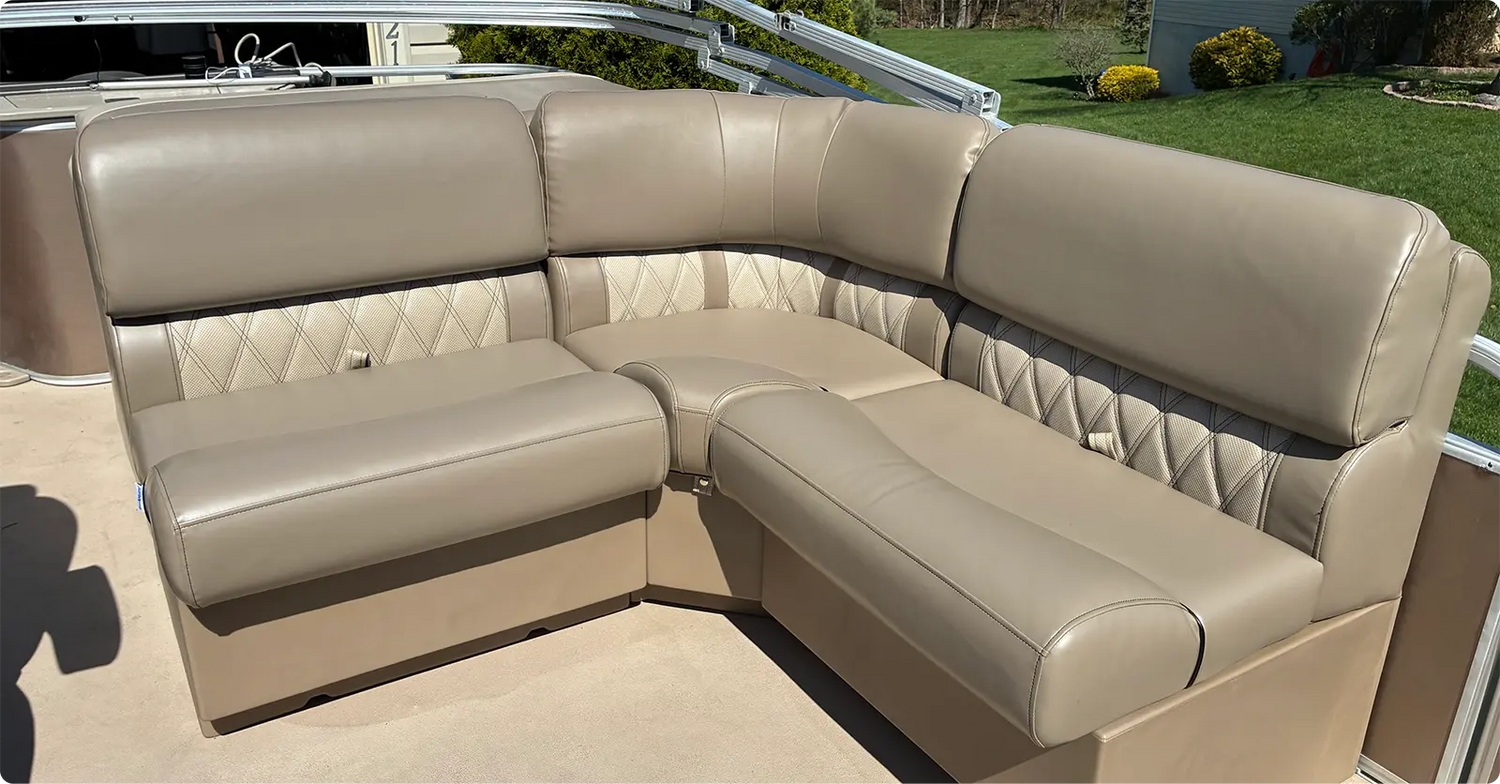
If your pontoon seats are cracked, faded, peeling, or uncomfortable, you may be wondering whether it's better to reupholster boat seats or invest in replacement pontoon seats. The right choice depends on the condition of your foam, seat bases, vinyl, budget, and long-term plans for the boat.
Quick Answer: Should You Reupholster or Replace Pontoon Seats?
Pontoon furniture shapes how the whole deck works. A vinyl repair won’t fix a bad layout or one that just no longer fits how your crew uses the boat. If the seats are worn and the layout has always been awkward, replacement gives you a chance to solve both problems at once.
The best choice depends on how far the damage goes and what you want from the boat when the project is done. Repair pontoon seats if the damage is small, the foam and base are still solid, and you like your current layout.
Replace pontoon seats if the foam is wet, flat, moldy, or uncomfortable, or if the bases are cracked, soft, or rotten. If the seat base is soft, warped, cracked, or sagging, fresh upholstery won’t fix what’s happening underneath.
When Reupholstering Pontoon Seats Is Worth It
Reupholstering pontoon seats is a smart middle-ground option when the seat bases and foam are still in good shape. You get a fresh look without replacing the entire furniture setup.
Reupholstery may be the right choice if:
- The seat bases are solid.
- The foam still bounces back.
- The cushions are comfortable.
- You like the current layout.
- The damage is mostly on the vinyl surface.
- You only need to refresh one or two seats.
- The seats are custom or hard to replace.
- The boat still feels good to use.
Before you choose reupholstery, press into the foam. If it feels crunchy, flat, soaked, or uneven, ask the upholstery shop to price foam replacement too.
Foam is often where a simple recovery, quick fix turns into a bigger, more expensive project, but don’t ignore it. Focusing on just cosmetic upgrades is one of the most expensive Common Pontoon Renovation Mistakes you can make.
When Replacing Pontoon Seats Is the Better Value
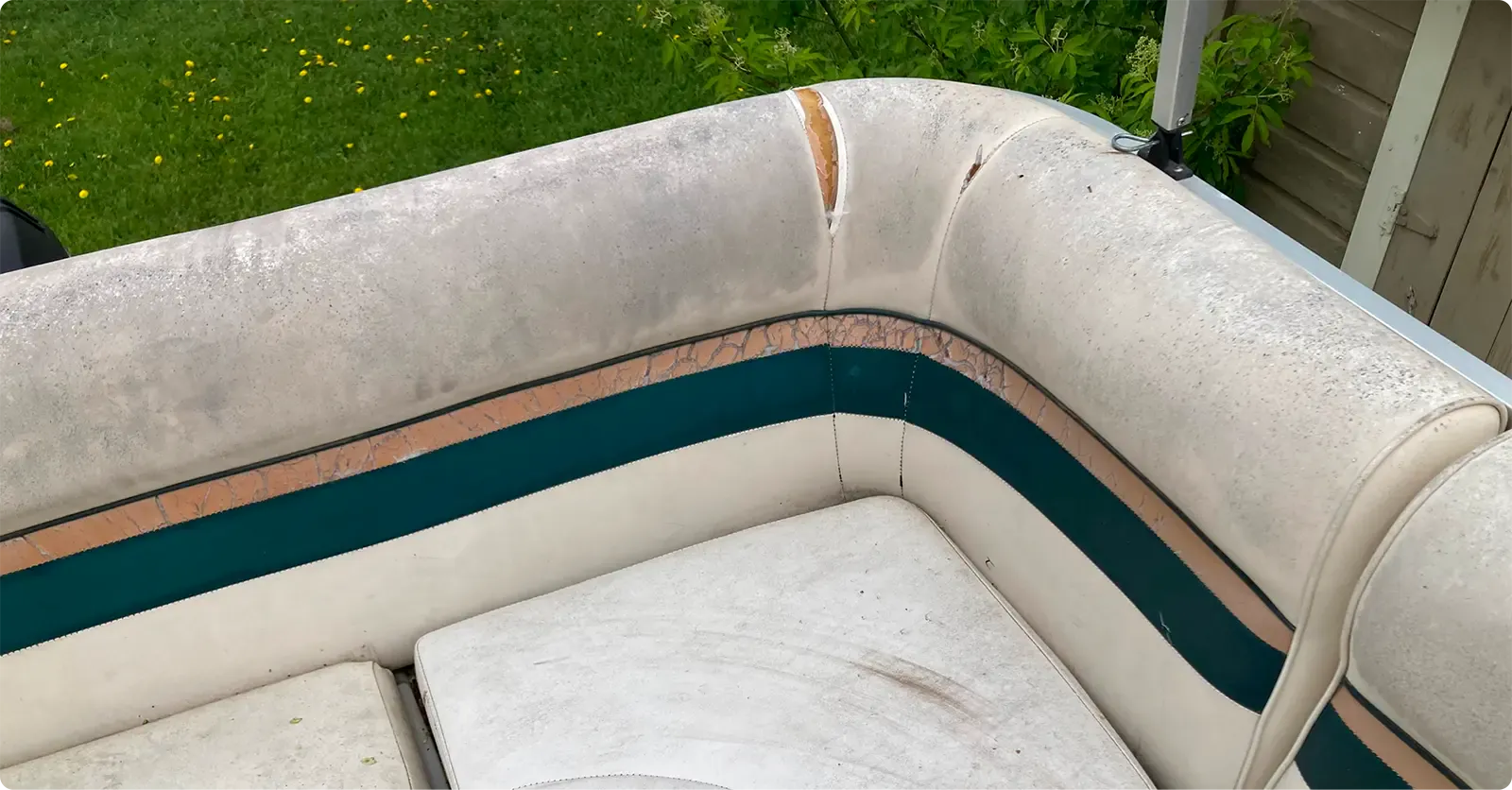
Replacing pontoon seats is the better choice when the seats are less than fresh. New upholstery can only help so much if the seat itself is tired.
Replacement is usually the better call if:
- The bases are soft, cracked, or warped.
- The foam feels flat, wet, or lumpy.
- Several seats are split or peeling.
- The seats smell musty after cleaning.
- The layout no longer fits how you use the boat.
- The furniture looks patched together from years of partial repairs.
- You’re already replacing flooring, decking, or fencing.
That last point is a big one. If you’re already stripping the boat down for a larger restoration, it’s often easier to update the furniture while everything is open and accessible. Installing new seats on a fresh deck can be the final piece that makes the whole rebuild feel complete.
New pontoon seats can also give you more confidence long term. PontoonStuff boat seats are backed by a 6-year warranty, giving you one more reason to feel good about replacing worn-out furniture instead of pouring more money into seats that are already breaking down.
Can You Repair Pontoon Seats Yourself?
You can possibly repair or reupholster pontoon seats yourself if you’re comfortable removing cushions, pulling staples, cutting vinyl, and stretching material evenly. It’s doable, but it takes patience and the right tools.
DIY Difficulty: What Can You Handle Yourself?
Some pontoon seat projects are beginner-friendly. Others can turn into a frustrating project full of regrets.
| Project | DIY Difficulty | Good Beginner Project? |
|---|---|---|
| Cleaning and conditioning vinyl | Easy | Yes |
| Patching a small vinyl tear | Easy to moderate | Yes |
| Recovering a flat cushion | Moderate | Maybe |
| Replacing foam | Moderate | Maybe |
| Reupholstering curved seat backs | Hard | Usually no |
| Full pontoon DIY reupholstery | Hard | No |
| Replacing modular pontoon seats | Moderate | Yes, with planning |
DIY reupholstery is easiest on simple, flat cushions. It gets harder with curved backs, corners, bolsters, pleats, and seats with multiple stitched panels.
Another thing to consider is that new seat cushions and seats aren’t always more expensive than repair costs, especially when you shop clearance pontoon seats and parts.
Common Mistakes to Avoid When Fixing Pontoon Seats
- Reupholstering over bad foam
- Ignoring soft or cracked bases
- Using household vinyl instead of marine-grade vinyl
- Forgetting to price labor and hardware
- Replacing one seat without checking color and height
- Waiting until spring to book upholstery work
- Cleaning old vinyl with harsh products
- Choosing the cheapest fix when the whole seat is failing
Is It Cheaper to Repair or Buy New Boat Seats?
Repairing pontoon seats is usually cheaper if you only have one split seam, puncture, or worn cushion, but replacing them can be a better value when several seats need work.
Once you start recovering multiple benches, replacing foam, fixing bases, and paying for custom upholstery labor, the total can get close to the cost of new pontoon furniture.
Here’s a practical way to think about the cost:
- Minor vinyl repair: Usually around $80 to $200 per seat. This works best for small tears, punctures, loose seams, or one damaged spot on an otherwise solid seat.
- Repairing one cushion: Often around $100 to $300+. This can make sense when the foam is still firm and only the vinyl cover needs to be replaced.
- Reupholstering one bench or seat: Commonly around $200 to $1,000, depending on the size, shape, material, foam condition, and labor involved.
- Reupholstering a captain’s chair: Often around $500 to $2,000 because helm seats usually have more curves, arms, panels, and stitching.
- Full pontoon or boat reupholstery: Can run around $2,000 to $10,000, especially when multiple seats, foam replacement, custom work, removal, and reinstall labor are involved.
Reupholstery pricing varies a lot by region and by shop. Always get the quote in writing and ask what happens if the shop finds bad foam or damaged bases after the seat comes apart.
Reupholstery is often cheaper for one or two otherwise good seats, while replacement usually wins when the whole interior needs attention and reupholstery costs start approaching the price of new seats.
If a full reupholstery quote does land close to the cost of a new pontoon seating package, compare what each option actually includes. Reupholstery may refresh just the cover material. Replacement can give you new vinyl, foam, bases, storage, and a better layout in one project.
When Reupholstery Becomes a Bad Deal
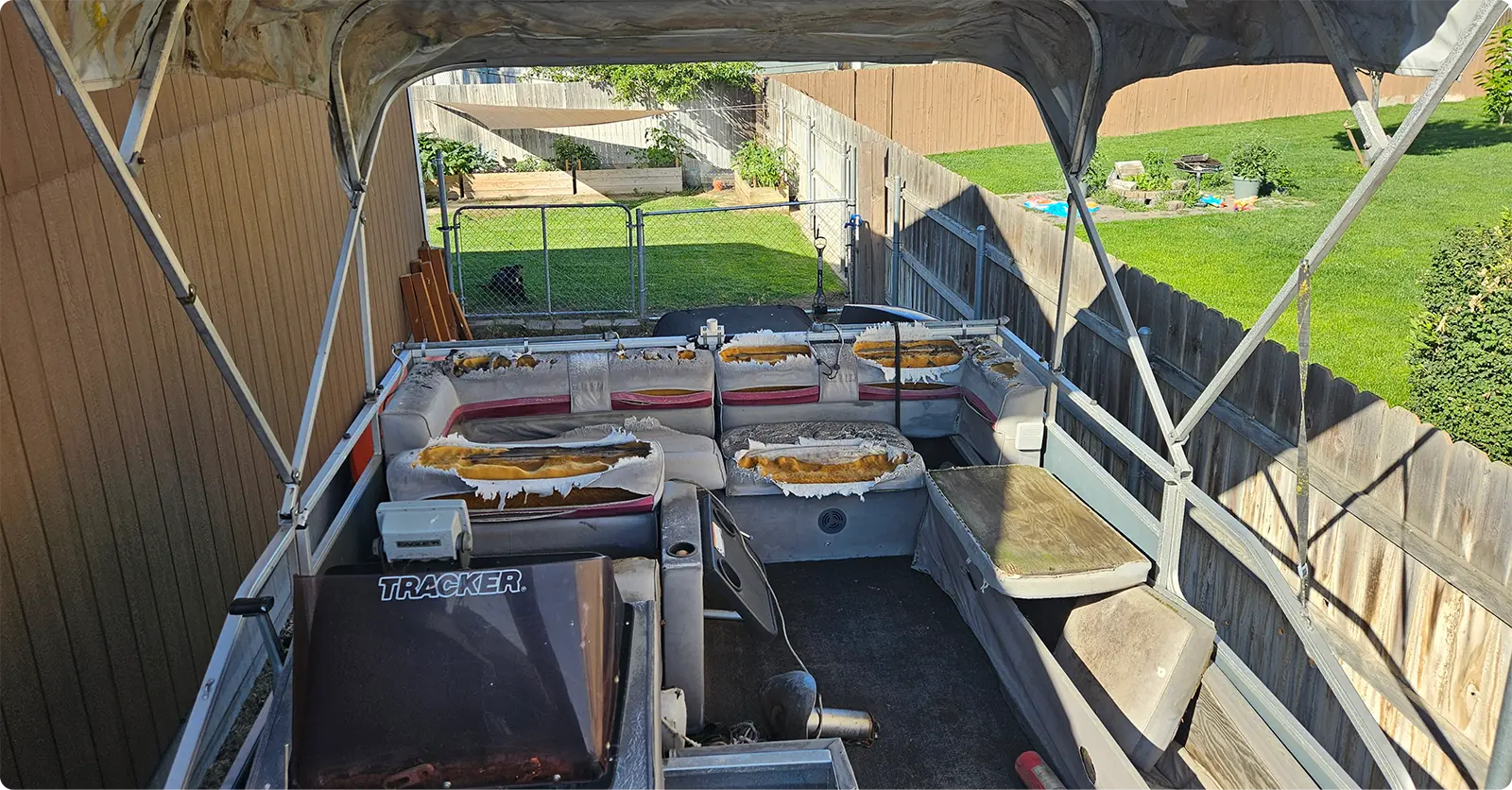
A repair saves money only if the rest of the seat is still worth saving. Reupholstery options start to lose value when you’re paying to recover seats that also need foam, base repair, hardware, and labor. At that point, you’re rebuilding old furniture piece by piece.
Reupholstery may not be the best value when:
- The quote is close to the cost of new pontoon seats.
- Several cushions need new foam.
- Seat bases need repair or replacement.
- You’re paying extra for removal and reinstall labor.
- The finished seats still won’t match the rest of the boat.
- You don’t love the current seating layout.
- The boat already needs flooring, fencing, or decking work.
Once reupholstery quotes get into the thousands, compare them against replacement pontoon seating before you approve the job.
How Long Do Pontoon Boat Seats Last?
Pontoon boat seats can last 10 years or more with good care, but sun damage, moisture, storage habits, and use can shorten that timeline. Covered, cleaned, and well-ventilated seats will usually last longer than seats left exposed all season.
The fastest way to age pontoon seats is to let moisture sit under the cover with no airflow. That’s when mildew thrives. A fitted cover, regular cleaning, and dry storage can help your seats stay cleaner and firmer for longer.
How Pontoon Seats Are Different from Other Boat Seats
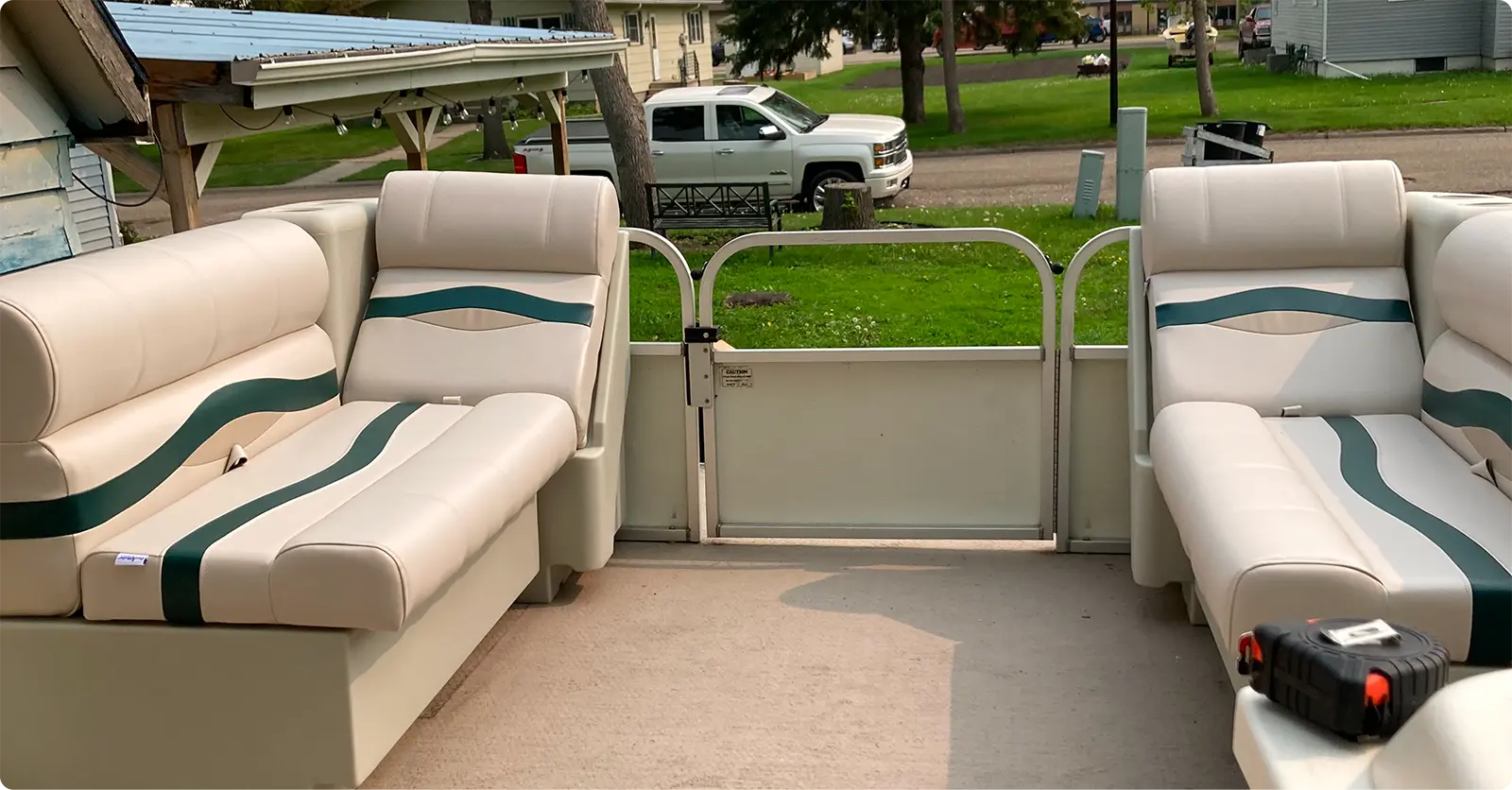
Pontoon seats are usually larger, more modular, and more layout-driven than many other boat seats. That makes the reupholster or replacement decision a little different from fixing a single fishing seat or captain’s chair.
A pontoon seating layout affects how people move around the boat, where gear gets stored, how many passengers can ride comfortably, and how the space works when you're out on the water.
That means the question is more than replace vs. repair pontoon seats. You’re also asking:
- Does this layout still work for how we use the boat?
- Do the seats match well enough to keep?
- Is the storage still useful?
- Are the bases strong and secure?
- Will new upholstery solve the problem, or only cover it up?
- Would replacement seats make the whole boat easier to use?
Are Pontoon Boat Seats Vinyl or Leather?
Most pontoon boat seats are marine-grade vinyl, not leather. Marine vinyl is used because it handles moisture, UV exposure, cleaning, and everyday boat traffic better than most traditional upholstery materials.
Leather may sound more upscale, but it usually isn’t the practical choice for pontoon seating. Boats deal with wet swimsuits, sunscreen, spilled drinks, fish slime, muddy feet, and hot sun. Marine-grade vinyl is built specifically for that life.
Make the Right Seat Choice for Your Pontoon
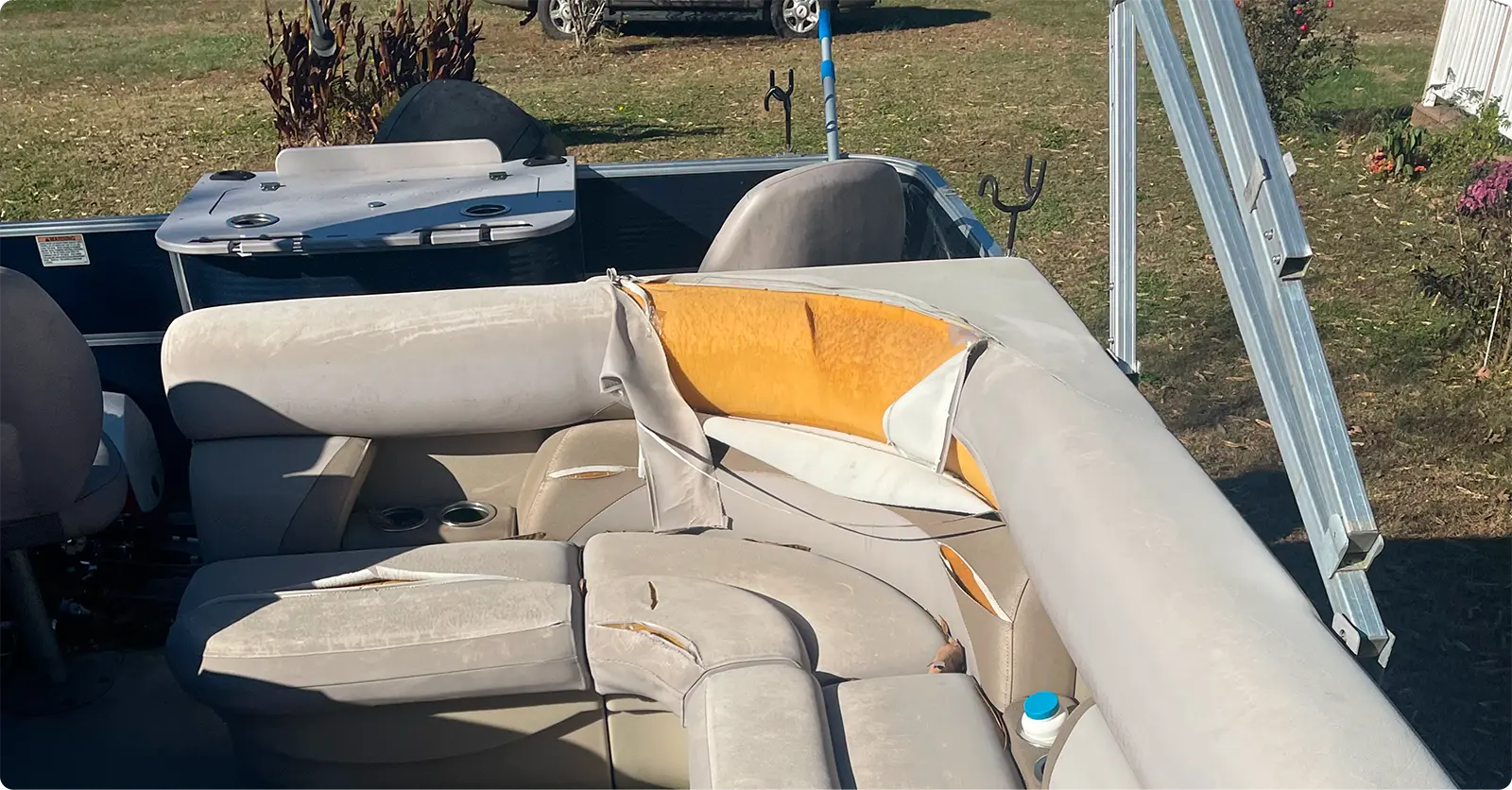
The repair vs replace pontoon seats decision is easier when you look past the vinyl and check the whole seat. Small cracks, loose seams, and light wear may only need repair. Solid seats with tired covers may be good candidates for reupholstery. Soft foam, damaged bases, musty cushions, and mismatched layouts usually point toward replacement.
If your pontoon seats are ready for more than a quick patch, PontoonStuff can help you plan the next step.
Whether you're repairing a single cushion or planning a complete restoration, PontoonStuff offers pontoon replacement seats, marine-grade seat vinyl, seating packages, seating accessories, and restoration resources to help you get the job done right. Browse our selection and find the seating solution that fits your boat, budget, and boating style.
Repair vs. Replace Pontoon Seats FAQs
How Long Do Pontoon Boat Seats Last?
Pontoon boat seats can last 10 years or more with good care, but exposure, storage, and cleaning habits make a big difference. Covers, airflow, gentle cleaning, and dry storage can help extend the life of your seats.
How Do I Know If Pontoon Seat Foam Is Bad?
Pontoon seat foam is bad if it stays compressed, feels lumpy, smells musty, or holds moisture. Good foam should feel supportive and bounce back after you press it. Bad foam usually means reupholstery will cost more.
Can You Replace Only Some Pontoon Seats?
Yes, you can replace only some pontoon seats, but matching color, height, and style can be difficult. Partial replacement works best when the remaining seats are still in good shape or when you’re replacing one defined area, like the helm seat.
Should I Replace Pontoon Seats When Replacing Flooring?
Yes, it’s often smart to replace pontoon seats during a flooring replacement project if the furniture is already worn. Since the boat is already stripped down, you can update the layout, furniture, and floor together.